
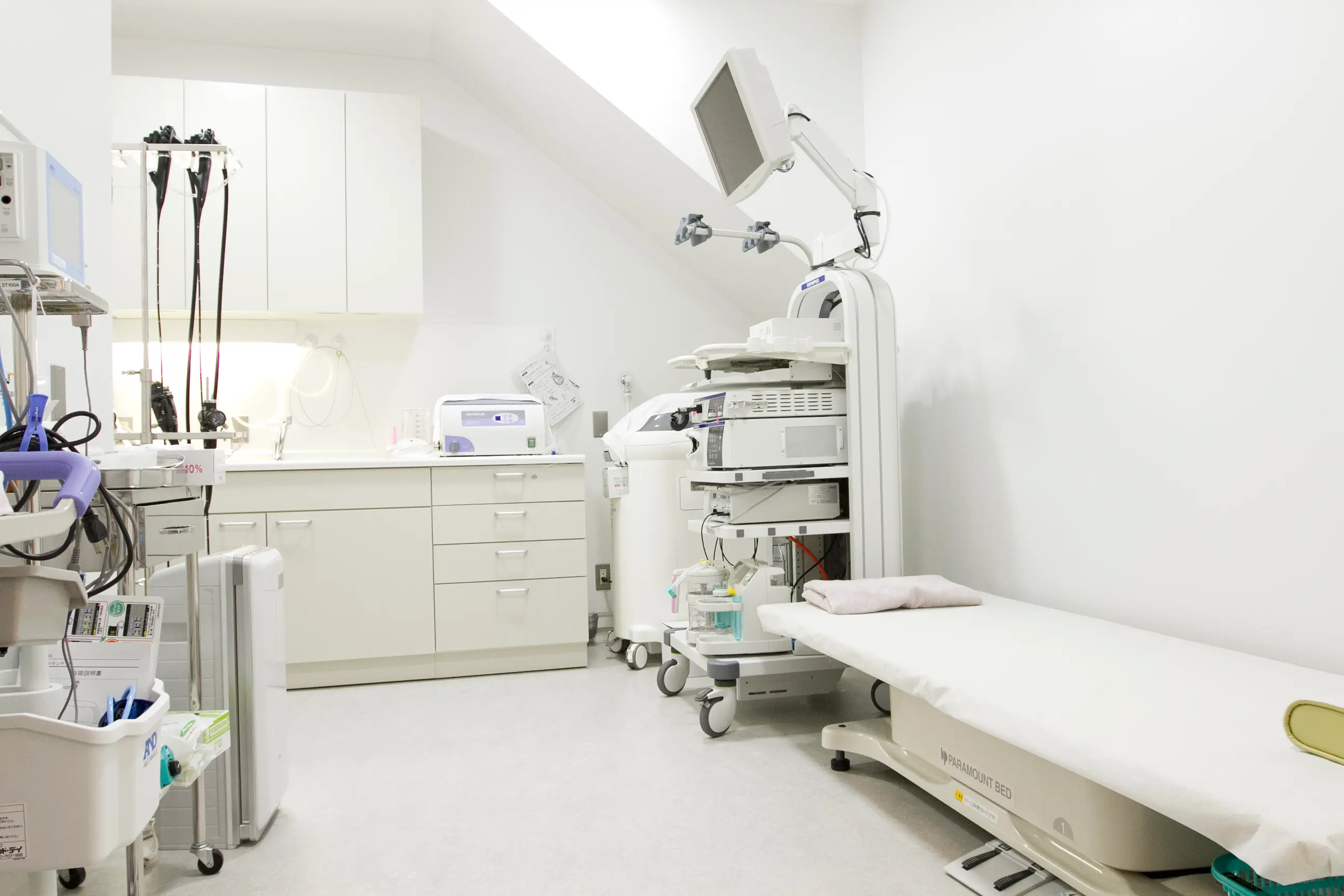
Endoscopy
Start with colonoscopy concerns
A positive fecal occult blood test, blood in the stool or a persistent change in bowel habits are common reasons to discuss colonoscopy. Gastroscopy remains available for upper digestive symptoms.
Endoscopic examination
Direct examination of the digestive tract lining
An endoscope helps the doctor assess color, surface changes, inflammation and bleeding. The findings are considered together with your symptoms and other tests.
Colonoscopy uses sedation and carbon dioxide. Bowel preparation is normally taken at home after individual instructions; patients who are concerned can ask about a trial dose. Gastroscopy is available through the nose or mouth using a thin scope, with sedation as an option. The final method is selected after reviewing your health, medication and examination purpose.
Comparison
Colonoscopy and gastroscopy
| Item | Colonoscopy | Gastroscopy |
|---|---|---|
| Area examined | Large intestine from the rectum toward the cecum | Esophagus, stomach and duodenum |
| Common reasons | Blood in stool, positive fecal occult blood test, change in bowel habits, abdominal pain | Heartburn, stomach pain, nausea, swallowing discomfort, abnormal barium test |
| Main preparation | Dietary instructions and bowel preparation at home | Individual instructions about food, drink and medication |
| Next step | View colonoscopy | View gastroscopy |
Before booking
Information to prepare
- Current symptoms and when they started
- Health screening or referral documents
- Previous endoscopy reports if available
- A complete list of medication and allergies
Contact
Ask about colonoscopy
Choose “not decided” if you are unsure whether you need gastroscopy or colonoscopy.